
TMJ Botox: Relief for Jaw Pain & Teeth Grinding
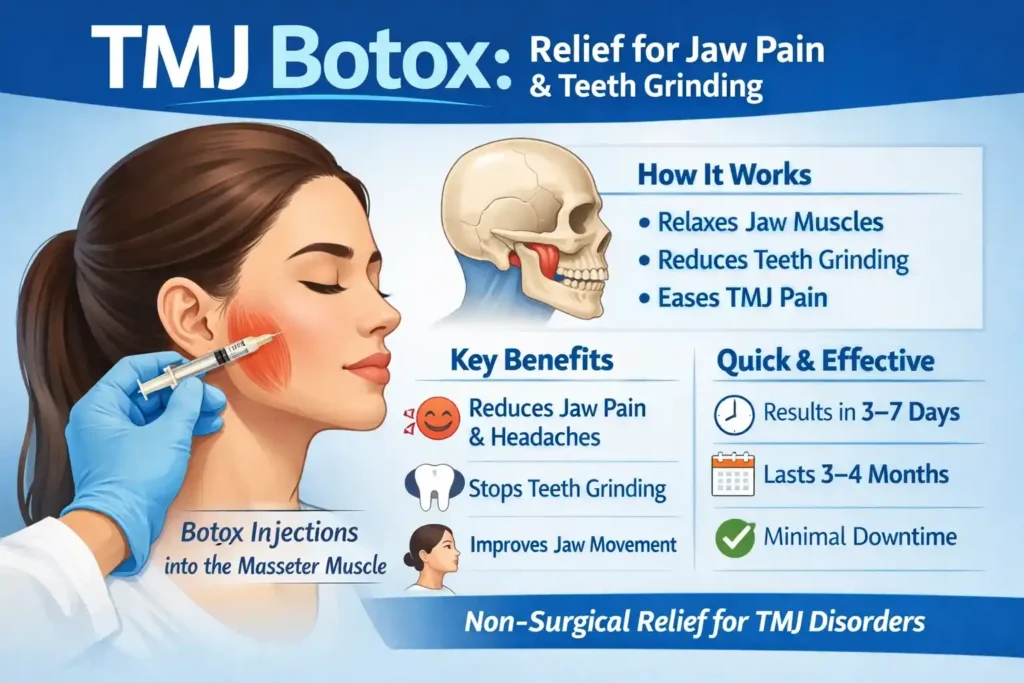
TMJ botox is a non-surgical treatment that relaxes overactive jaw muscles to reduce pain, teeth grinding, and tension. It works by injecting botulinum toxin into the masseter muscle, easing pressure on the temporomandibular joint. Most patients notice relief within days, with results lasting 3–4 months.
AI SUMMARY
TMJ botox is a treatment used to relieve symptoms of temporomandibular joint disorder by relaxing the jaw muscles. It reduces pain, jaw tension, and teeth grinding by limiting muscle overactivity.
Doctors often recommend botox for TMJ when other treatments like mouthguards or medications do not provide enough relief. It is quick, minimally invasive, and requires little downtime.
Many patients experience improved comfort, fewer headaches, and better jaw movement after treatment. Results typically last a few months and can be maintained with repeat sessions.
Introduction
If you wake up with jaw pain, headaches, or sore teeth, you may be dealing with TMJ issues. Many people grind their teeth at night without realizing it. Over time, this puts stress on your jaw and facial muscles.
This is where tmj botox can make a real difference. It offers a simple, non-surgical way to reduce pain and improve jaw function. Instead of masking symptoms, it targets the root cause—muscle overactivity.
In this guide, you’ll learn how TMJ botox works, who it’s for, and what results you can expect.
What Is TMJ Botox and How Does It Work?
TMJ botox is a treatment that relaxes jaw muscles to reduce pain and tension.
TMJ stands for temporomandibular joint disorder, a condition affecting the joint that connects your jaw to your skull. When this joint is stressed, it can cause pain, stiffness, and difficulty chewing.
How Botox Works for TMJ
Botox contains botulinum toxin, which temporarily blocks nerve signals to muscles. When injected into the masseter muscle, it reduces excessive muscle activity.
Key Effects:
- Relaxes tight jaw muscles
- Reduces teeth grinding (bruxism)
- Decreases pressure on the joint
- Improves jaw movement
According to dental professionals, muscle relaxation is one of the most effective ways to manage TMJ symptoms when conservative treatments fail.
Benefits of TMJ Botox Treatment
TMJ botox provides relief from jaw pain, headaches, and teeth grinding.
Many patients turn to botox for TMJ pain after struggling with long-term discomfort. The benefits go beyond simple pain relief.
Main Benefits:
- Reduces chronic jaw pain
- Minimizes teeth grinding at night
- Relieves tension headaches
- Improves jaw mobility
- Slims the jawline (cosmetic benefit)
Real-World Example
A patient who clenches their jaw during stress may develop constant headaches. After masseter botox TMJ treatment, they often report fewer headaches and better sleep within weeks.
Who Is a Good Candidate for TMJ Botox?
TMJ botox is ideal for people with jaw tension, teeth grinding, or chronic TMJ pain.
You may benefit from this treatment if you experience:
Common Symptoms:
- Jaw pain or stiffness
- Clicking or popping sounds
- Frequent headaches
- Teeth grinding (bruxism)
- Difficulty opening or closing your mouth
When Doctors Recommend It
Healthcare providers often suggest jaw botox for TMJ when:
- Mouthguards don’t work
- Pain medications provide limited relief
- Symptoms interfere with daily life
What to Expect During the Procedure
TMJ botox treatment is quick, minimally invasive, and usually takes 10–20 minutes.
The process is simple and done in a clinical setting.
Step-by-Step Process:
- Consultation and assessment
- Identification of injection points
- Small injections into the masseter muscle
- Immediate return to daily activities
Pain Level
Most patients describe the injections as mild discomfort, similar to a pinprick.
Timeline for Results:
- Initial relief: 3–7 days
- Full results: 2 weeks
- Duration: 3–4 months
Risks, Side Effects, and Safety
TMJ botox is generally safe when performed by a trained professional.
Like any treatment, there are potential side effects.
Common Side Effects:
- Mild swelling or bruising
- Temporary muscle weakness
- Slight discomfort at injection site
Rare Risks:
- Uneven smile
- Difficulty chewing hard foods
According to healthcare experts, these effects are usually temporary and resolve on their own.
Cost of TMJ Botox in the US
TMJ botox cost varies based on location, provider, and number of units used.
Average Cost Breakdown:
| Factor | Estimated Cost |
| Per unit | $10–$20 |
| Total treatment | $300–$800+ |
| Maintenance sessions | Every 3–4 months |
Important Note:
Insurance may not cover tmj botox treatment since it is often considered cosmetic, even though it provides medical relief.
TMJ Botox vs Other TMJ Treatments
TMJ botox is a non-surgical alternative to traditional TMJ treatments.
Comparison Table:
| Treatment | Pros | Cons |
| Mouthguard | Non-invasive | May not stop muscle tension |
| Medications | Quick relief | Temporary solution |
| Physical therapy | Improves mobility | Requires time and effort |
| TMJ Botox | Targets muscle cause | Needs repeat sessions |
Pro Tip from Experts
If you grind your teeth at night, combine TMJ botox with a custom night guard for better results.
This dual approach reduces muscle activity and protects your teeth from damage.
FAQs About TMJ Botox
1. How long does TMJ botox last?
Results usually last 3 to 4 months. Regular treatments maintain long-term relief.
2. Is botox for TMJ painful?
Most patients feel minimal discomfort. The procedure is quick and well-tolerated.
3. Can TMJ botox stop teeth grinding completely?
It significantly reduces grinding but may not eliminate it entirely.
4. Is TMJ botox safe?
Yes, when performed by a trained medical professional, it is considered safe.
5. How many units are needed for TMJ botox?
Most patients need 20–50 units per side, depending on muscle strength.
Conclusion
Living with jaw pain can affect your sleep, mood, and daily comfort. If traditional treatments haven’t worked, tmj botox offers a modern solution that targets the root cause.
It is fast, effective, and requires little downtime. Many patients notice significant improvement in pain, jaw function, and overall quality of life.
If you’re struggling with TMJ symptoms, consult a qualified provider to see if this treatment is right for you.