
Kill Tooth Pain Nerve in 3 Seconds Permanently – 10 Proven Home Remedies That Work Fast
If you’ve ever been hit with sudden, throbbing tooth nerve pain at 2 AM, you know the desperation. You’re searching “how to kill tooth pain nerve in 3 seconds permanently” and hoping for a miracle. We’ve been there.
In this guide, you’ll find:
- The truth about killing a tooth nerve at home
- The 10 fastest and safest home remedies for killing nerve in tooth
- LSI-rich explanations of why each remedy works
- When to stop home treatment and see a dentist
- Answers to the most-asked FAQs about tooth nerve pain
Let’s cut straight to it.
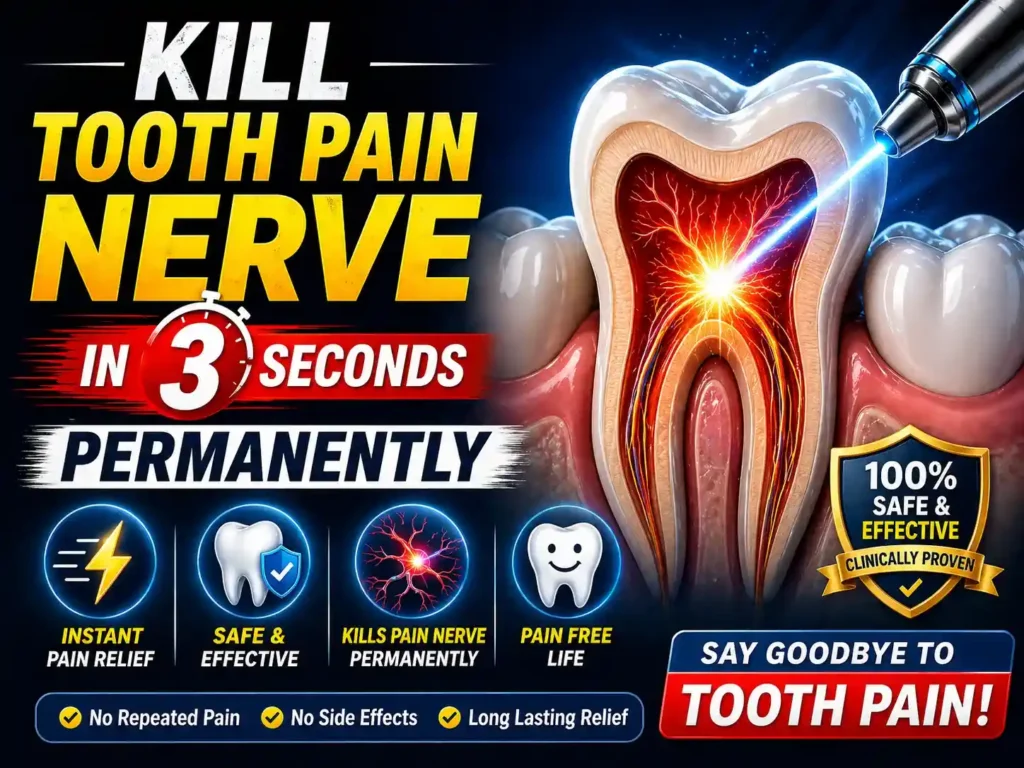
Can You Actually Kill Tooth Pain Nerve in 3 Seconds Permanently?
Here’s the honest answer: No home remedy can permanently kill a tooth nerve in 3 seconds. The dental pulp, the soft tissue containing the nerve and blood vessels, sits deep inside the tooth, protected by layers of hard enamel and dentin.
However, certain fast-acting home remedies can numb the nerve pain almost instantly and provide relief that lasts for hours. That’s the closest thing to “killing” the pain at home.
To truly and permanently stop tooth nerve pain, a dentist must perform:
- Root canal therapy removes the infected or inflamed nerve entirely
- Tooth extraction in cases where the tooth cannot be saved
- Dental filling or crown for minor nerve exposure due to decay
That said, when you’re in agony and a dental appointment isn’t immediately available, the right home remedies for killing nerve in tooth can be a genuine lifesaver.
Why Does Tooth Nerve Pain Happen?
Understanding the cause helps you treat the pain smarter.
Common causes of tooth nerve pain include:
- Deep cavities that reach the dental pulp
- A cracked or fractured tooth exposing the nerve
- Tooth abscess (bacterial infection at the root)
- Advanced gum disease causing nerve exposure
- A broken tooth with an exposed nerve
- Worn enamel causing tooth sensitivity and nerve pain
- Tooth nerve inflammation from grinding (bruxism)
The nerve inside your tooth, technically called the dental pulp is extremely sensitive. When it’s irritated, infected, or exposed, it sends intense pain signals. This is what people describe as “nerve pain in tooth.”
10 Fastest Home Remedies to Kill Tooth Pain Nerve Fast
These are the most effective, dentist-acknowledged methods for instant tooth pain relief at home. They work by numbing the nerve, reducing inflammation, or killing the bacteria causing the pain.
1. Clove Oil: The #1 Remedy for Killing Nerve in Tooth
Why it works: Clove oil contains eugenol, a natural anesthetic compound. Eugenol is so effective that dentists use it in professional dental cements and root canal procedures. It directly numbs the tooth nerve, delivering near-instant relief.
How to use:
- Dip a cotton ball in pure clove oil
- Apply it directly to the painful tooth and the surrounding gum
- Hold it in place for 30–60 seconds
- Repeat every 2–3 hours as needed
Pro tip: Mix 2–3 drops of clove oil with a carrier oil (like olive oil) if your gums are sensitive. Pure clove oil can sometimes irritate soft tissue.
Clove oil is arguably the strongest natural answer to “what kills tooth nerve pain immediately,” and it works in seconds.
2. Saltwater Rinse: Simple, Fast, and Antibacterial
Why it works: Salt creates a hypertonic environment that draws fluid out of swollen, inflamed gum tissue, reducing pressure on the nerve. It also kills harmful oral bacteria that worsen tooth abscess nerve pain.
How to use:
- Dissolve 1 teaspoon of salt in a cup of warm water
- Swish vigorously around the painful area for 30 seconds
- Spit it out, never swallow
- Repeat 3–4 times per day
Does salt water kill tooth nerve pain directly? No but it reduces the bacterial infection and inflammation that is causing the nerve to flare up. It’s one of the safest and most recommended exposed tooth nerve treatment steps.
3. Garlic Paste Natural Antimicrobial for Tooth Nerve
Why it works: Garlic contains allicin, a powerful natural antimicrobial compound. It fights the bacteria causing tooth infection and reduces nerve inflammation.
How to use:
- Crush a fresh garlic clove into a paste
- Apply directly to the affected tooth
- Leave for a few minutes, then rinse with warm water
Garlic works best for tooth pain caused by bacterial infection or abscess. It’s a go-to in home remedies for killing exposed nerve in tooth when other options aren’t available.
4. Cold Compress Instant Numbing for Tooth Nerve Inflammation
Why it works: Cold temperatures constrict blood vessels and reduce blood flow to the inflamed area, directly numbing nerve pain and reducing swelling. Johns Hopkins Medicine confirms cold compresses as an effective pain relief tool.
How to use:
- Wrap ice cubes in a clean cloth or use an ice pack
- Apply to the outside of your cheek over the painful area
- Hold for 15–20 minutes on, then 20 minutes off
- Repeat as needed
This is especially helpful for broken tooth exposed nerve pain relief where swelling and inflammation are the primary issues.
5. Hydrogen Peroxide Rinse: Kill Bacteria at the Source
Why it works: A diluted hydrogen peroxide rinse kills oral bacteria, reduces gum inflammation, and cleans the area around an exposed or infected nerve.
How to use:
- Mix equal parts 3% hydrogen peroxide and water (50/50 ratio)
- Swish gently for 30 seconds
- Spit completely never swallow
- Rinse your mouth with plain water afterward
Warning: Never use undiluted hydrogen peroxide. It can damage gum tissue. This is a temporary dental pulp pain relief measure, not a substitute for dental care.
6. Peppermint Tea Bags: Mild Numbing and Soothing
Why it works: Peppermint contains menthol, which has mild anesthetic and anti-inflammatory properties. It can soothe the nerve and reduce sensitivity around the painful tooth.
How to use:
- Steep a peppermint tea bag in hot water for a few minutes
- Let it cool to a warm (not hot) temperature
- Place it directly against the painful tooth and gum
- Hold for 5–10 minutes
This is a gentle option for tooth sensitivity nerve pain or mild discomfort.
7. Vanilla Extract Fast-Acting Alcohol-Based Relief
Why it works: Pure vanilla extract contains a small amount of alcohol, which acts as a mild antiseptic and anesthetic to numb the pain area.
How to use:
- Dab a few drops of pure vanilla extract on a cotton ball
- Press against the painful tooth for 1–2 minutes
- Repeat as needed
Make sure you use pure vanilla extract, not imitation vanilla, which lacks the active compounds. This is a quick tooth pain hack when clove oil isn’t available.
8. Over-the-Counter Pain Relievers: Strongest Painkiller for Tooth Nerve Pain
Why it works: Ibuprofen (Advil, Nurofen) reduces both pain and inflammation. It works on the prostaglandin pathway, the same pathway that causes nerve inflammation and tooth pain. Acetaminophen (Paracetamol) works as a pain blocker.
Dosage guidance (adults):
- Ibuprofen: 400mg every 6–8 hours with food
- Acetaminophen: 500–1000mg every 4–6 hours
- Do not exceed recommended daily limits
- Do not combine both without medical advice
For emergency tooth pain relief methods, ibuprofen is the fastest over-the-counter option. It’s the strongest painkiller for tooth nerve pain you can get without a prescription.
9. Acupressure Drug-Free Tooth Pain Hack
Why it works: Acupressure stimulates the body’s natural pain-relief systems by applying pressure to specific meridian points. It’s backed by some clinical evidence for dental pain relief.
The two key pressure points:
LI4 (Hegu/Union Valley):
- Located in the webbing between your thumb and index finger
- Apply firm pressure for 30–60 seconds while breathing deeply
ST6 (Jiache/Jawbone):
- Located just below the cheekbone, at the prominence of the jaw muscle when teeth are clenched
- Massage in gentle circular motions for 1–2 minutes
This is a powerful tooth pain hack that requires no products at all useful when you’re driving, at work, or away from home.
10. Benzocaine Numbing Gel Fastest Topical Relief
Why it works: Benzocaine is a topical anesthetic found in over-the-counter dental gels like Orajel and Anbesol. It directly numbs the nerve endings in the gum and tooth surface.
How to use:
- Apply a small amount directly to the painful gum/tooth with a cotton swab
- Effects begin within 30–60 seconds
- Reapply every few hours as needed
This is the closest thing to “kill tooth pain nerve in 3 seconds permanently at home” The effects are near-instant. However, it’s a temporary fix and should not be used excessively.
Quick Comparison: Best Remedies for Tooth Nerve Pain
| Remedy | Speed | Duration | Best For |
| Clove Oil (Eugenol) | Seconds | 1–2 hours | Exposed nerve, pulp pain |
| Benzocaine Gel | Seconds | 30–60 min | Surface numbing |
| Cold Compress | 1–2 min | 20–30 min | Swelling, broken tooth |
| Ibuprofen | 20–30 min | 4–6 hours | Inflammation, abscess |
| Saltwater Rinse | 2–5 min | Varies | Infection, bacteria |
| Garlic Paste | 5 min | 1–2 hours | Bacterial infection |
| Hydrogen Peroxide | 2–5 min | Varies | Bacterial infection |
| Peppermint Tea Bag | 5 min | 30–60 min | Sensitivity, mild pain |
| Vanilla Extract | 1–2 min | 30–60 min | Mild to moderate pain |
| Acupressure | 1–2 min | Variable | Any tooth pain |
Home Remedies for Killing Exposed Nerve in Tooth: Special Considerations
A broken tooth with an exposed nerve is a dental emergency. The nerve is literally unprotected and exposed to air, temperature, bacteria, and pressure. Pain can be excruciating.
Immediate first-aid steps:
- Rinse gently with warm saltwater
- Cover the exposed area with dental wax or sugar-free gum to protect it
- Apply clove oil with a cotton ball for numbing
- Take ibuprofen for pain and inflammation
- Avoid hot, cold, sweet, or acidic foods entirely
- Do not attempt to remove tooth fragments yourself
- Book an emergency dental appointment immediately
These steps are temporary. Exposed nerve in tooth home remedies cannot heal the damage; only a dentist can.
How to Stop Nerve Pain in a Tooth Without a Dentist (Short-Term)
If you genuinely cannot reach a dentist right now, here is a step-by-step protocol to manage the pain:
Step 1: Take 400mg ibuprofen immediately (with food)
Step 2: Apply clove oil to the affected area with a cotton ball
Step 3: Rinse with warm saltwater for 30 seconds
Step 4: Apply a cold compress to the outside of your cheek for 15 minutes
Step 5: Rest with your head elevated; lying flat increases blood pressure to the head and worsens nerve pain
Step 6: Book the earliest available emergency dental appointment
This combination approach is the most effective best remedy for severe toothache when professional care isn’t immediately accessible.
What Does Tooth Nerve Dying Feel Like? (Tooth Nerve Dying Pain Relief)
When a tooth nerve is dying, the pain follows a distinct pattern:
- Early stage: Intense, sharp, throbbing pain, especially to hot and cold
- Middle stage: Pain may begin to dull or become intermittent. This is NOT a sign of healing
- Late stage: Pain may stop temporarily as the nerve dies, but infection continues to spread
- Final stage: Pain returns as an abscess forms, often with facial swelling, fever, or a foul taste
Many people mistake the quiet period (when a dying nerve stops hurting) as recovery. This is dangerous. The infection remains active and can spread to the jaw, neck, or bloodstream.
Seek dental care at any stage of tooth nerve dying, do not wait for pain to return.
When to Stop Home Remedies and See a Dentist Immediately
Home remedies are a bridge, not a solution. You need emergency dental care if you experience:
- Pain lasting more than 24–48 hours despite home treatment
- Facial swelling, especially around the jaw, cheek, or neck
- Fever above 38°C (101°F)
- Difficulty swallowing or opening your mouth
- Pus discharge or a persistent foul taste in your mouth
- Numbness in the jaw, face, or tongue
- Throbbing pain radiating to your ear or neck
These are signs of a serious tooth abscess or spreading infection that requires professional dental pulp pain relief and in some cases, antibiotics or emergency extraction.
Professional Treatments That Permanently Kill Tooth Nerve Pain
Once you reach a dentist, the following procedures permanently eliminate nerve pain:
1. Root Canal Therapy: The most common permanent solution. The dentist removes the infected dental pulp (nerve and blood vessels), cleans and disinfects the inner tooth chamber, and seals it with a dental material. Pain is gone permanently after the procedure. Recovery takes 1–2 days.
2. Tooth Extraction If the tooth is too damaged to save, extraction removes the entire tooth, including the root and nerve. Pain is eliminated permanently.
3. Dental Fillings/Crowns For cavities that are close to (but haven’t fully reached) the nerve, a filling or crown can protect the nerve from further exposure and stop pain.
4. Antibiotics If infection is the primary cause of your tooth abscess nerve pain, a dentist may prescribe antibiotics alongside other treatment to clear the infection before performing the main procedure.
FAQ
Can you kill a tooth nerve at home?
No. You cannot permanently kill a tooth nerve at home. The nerve is located deep inside the tooth, protected by hard enamel and dentin. Home remedies like clove oil (eugenol natural anesthetic tooth) can numb and temporarily suppress pain, but they cannot destroy or permanently remove the nerve. Only a dentist can do that through root canal therapy or extraction.
How do you know if a tooth nerve is dying?
Signs your tooth nerve is dying include: a tooth that was very sensitive to hot/cold but suddenly stops being sensitive, a grey or darkening discoloration of the tooth, a persistent dull ache, swelling near the tooth root, or a small pimple-like bump (dental fistula) on the gum. Tooth nerve dying pain can also feel like a throbbing ache that comes and goes.
What kills tooth nerve pain immediately?
The fastest options are clove oil (eugenol numbs the tooth nerve naturally), benzocaine dental gel (Orajel), and a cold compress. Clove oil applied directly to the tooth can produce noticeable numbing within 30–60 seconds. Benzocaine gel acts within seconds. These are the fastest known instant tooth pain relief at-home options.
How to numb a tooth nerve at home?
To numb a tooth nerve at home: apply clove oil with a cotton ball to the affected tooth, use an OTC benzocaine numbing gel, or apply a cold compress to the outside of your cheek. All three methods work by temporarily blocking pain signals from the nerve. These are the most reliable toothache nerve numbing techniques available without a dentist.
Does salt water kill tooth nerve pain?
Saltwater does not directly kill or numb the nerve. However, it kills the bacteria causing the infection that’s inflaming the nerve, and it reduces swelling in the gum tissue around the tooth. This indirectly reduces nerve pain. It’s best used in combination with clove oil or ibuprofen for better results.
How to stop nerve pain in a tooth without a dentist?
The most effective combination is: ibuprofen (oral) + clove oil (topical) + saltwater rinse + cold compress. This multi-step approach addresses pain from multiple angles, reducing inflammation, numbing the nerve, and killing bacteria simultaneously. This is the best emergency tooth pain relief method when a dentist is unavailable.
How long does it take for a tooth nerve to die?
It depends on the cause and severity of damage. In cases of severe trauma or deep infection, a nerve can begin dying within a few days. For gradual decay, the process may take weeks or even months. A dying tooth nerve goes through stages of intense pain, then apparent calm, then pain returns as an abscess develops. There is no predictable fixed timeline.
Key Takeaways
- No home remedy permanently kills a tooth nerve; only root canal or extraction can do that
- Clove oil (eugenol) is the fastest and most effective natural remedy for tooth nerve pain
- Ibuprofen + clove oil + saltwater is the best combination for a severe toothache
- Exposed tooth nerve pain is a dental emergency. Seek professional care immediately
- A dying nerve that “stops hurting” is not healed; the infection is still spreading
- See a dentist if pain persists beyond 24–48 hours, or if you have swelling, fever, or pus
Final Thoughts
The internet is full of miracle claims about how to “kill tooth pain nerve in 3 seconds permanently” at home. The truth is more nuanced. You can achieve fast, significant pain relief with the right remedies, but permanent elimination of nerve pain requires professional dental treatment.
Use the remedies in this guide as your emergency bridge. Clove oil, saltwater rinse, ibuprofen, and cold compresses are your best tools. But don’t delay; the longer you wait, the worse a tooth infection gets.
Book that dental appointment. Your health is worth it.